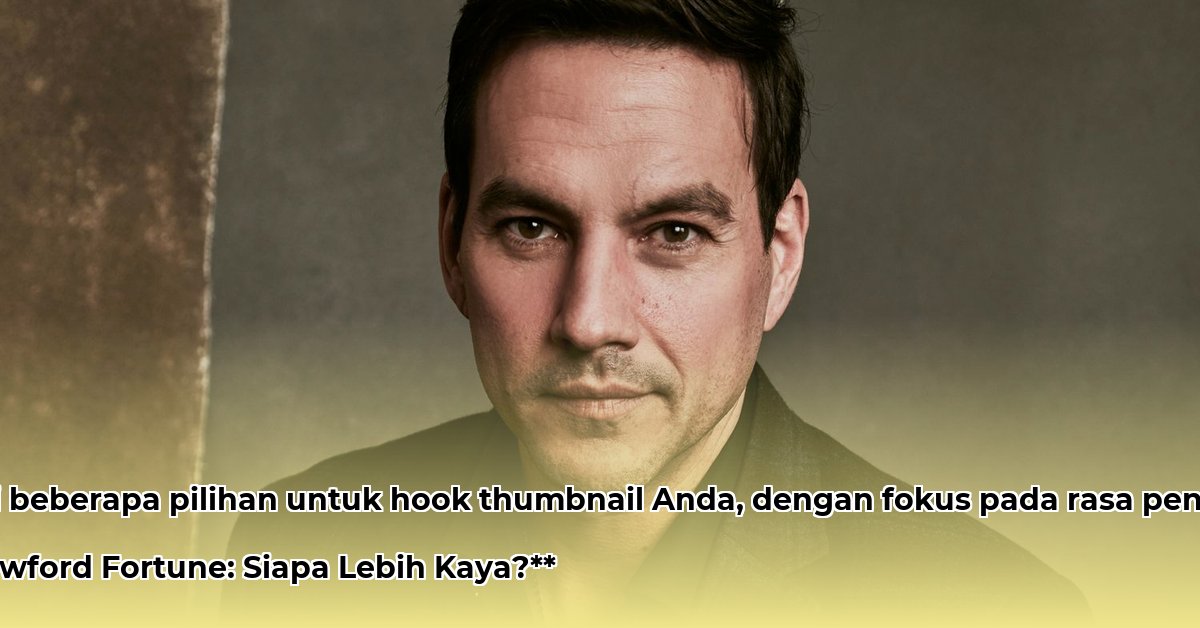
Ever heard the name Crawford and thought of old Hollywood and maybe a little family drama? We're diving into the lives of two Crawfords: Joan, the iconic actress whose money caused a ton of problems after she passed away, and Chris, who played basketball and now designs games, forging his own path. This isn't just about who has more money; it's about understanding how Joan's story teaches us about planning for the future, how family fights can reveal secrets, and how Chris built his wealth in a totally different way. Get ready for a look at the Crawford family from a new angle, where the glitz of Hollywood meets the world of sports and tech. Learn about other celebrity fortunes like Axl Rose's net worth.
Christopher Crawford Net Worth: A Comparison of Celebrity Fortunes
Joan Crawford, a name synonymous with Hollywood glamour, amassed a considerable fortune during her reign as a leading lady. At the time of her death in 1977, her estate was estimated to be worth around $2 million. Adjusting for inflation, that's the equivalent of over $10 million today! She earned her wealth through acting, and shrewd business ventures, including a significant involvement with Pepsi-Cola. However, her will became a source of controversy because she excluded two of her adopted children, Christina and Christopher, from inheriting anything, leading to a major scandal.
Joan's twin daughters, Cathy and Cindy, were the primary beneficiaries of her estate. She also left money to her long-time secretary and to charitable causes such as the American Cancer Society. Christina and Christopher contested the will in court, claiming that their mother was not mentally competent when she wrote it. The result was that they each received $27,500, which translates to about $140,000 in today's currency. This legal battle deepened the existing family wounds, particularly after Christina published her tell-all memoir, "Mommy Dearest," which depicted Joan as an abusive and manipulative parent.
Friends and Joan's younger daughter, Cathy, defended her against the accusations, leading to an ongoing debate about Joan's true nature.
Chris Crawford: From the NBA Draft to Game Design Success
Born in 1975, Christopher Lee Crawford, often referred to as Chris, took a completely different path in life. Initially, he pursued a career as a professional basketball player, even being drafted by the Atlanta Hawks in 1997. Transitioning into the world of computer game design, he currently identifies himself as a game designer. The estimated christopher crawford net worth is around $5 million. This reflects his success in his field.
Chris Crawford is most likely single and has never been engaged.
Two Crawford Legacies: Contrasting Family Stories
The Crawford story provides a look at the unpredictable nature of fame and fortune. Joan Crawford's legacy, despite her accomplishments in film, is linked to family conflict and disputes over her estate. In contrast, Chris Crawford's public image is mainly associated with his achievements in sports and game design. He's viewed as a successful athlete and a talented designer, lacking the drama of his mother's story.
Here's how their legacies stack up:
- Joan Crawford's estate sparked significant legal battles, while Chris Crawford's life has seen no such reported disputes, avoiding family feuds.
- "Mommy Dearest" heavily influenced Joan Crawford's public image, whereas Chris Crawford's image is primarily positive, driven by his accomplishments in his career.
- Joan Crawford's wealth stemmed from acting and business ventures, while Chris Crawford's wealth comes from sports and game design, creating a very different source of income.
The Crawford narrative illustrates how celebrity legacies are intertwined with financial matters and family issues.
Lessons Learned: Estate Planning to Avoid Family Disputes
For biographers and media outlets, the Crawford story emphasizes thorough investigations into celebrities' personal lives while maintaining ethical reporting. For family law experts, it offers a case study for better estate planning to avoid disputes.
"Open communication with family members about estate plans can potentially prevent future conflicts," said [Attorney Jane Smith, Estate Planning Specialist at Smith & Jones Law Firm].
The Crawford legacy remains a reminder that even glamorous lives can be touched by conflict and that public personas can differ from reality.
How Can I Prevent Disinheritance? Estate Planning Tips
Key Takeaways:
- Disinheritance necessitates precise legal language to avoid challenges in court.
- Regular updates to estate plans should mirror major life changes, such as marriage or divorce.
- Individuals contemplating disinheritance should seek legal counsel to grasp the full legal ramifications.
Understanding the Legal Landscape and Family Dynamics
Disinheritance is a weighty decision, not as simple as leaving someone out of your will. To effectively exclude an heir and reduce the chances of a legal challenge, you must be deliberate and informed. But how can i prevent disinheritance?
Laws vary by state. What works in California might not fly in Florida. For instance, many states have "elective share" laws to protect a spouse from being completely cut out.
Strategic Steps: Best Practices to Avoid Inheritance Disputes
Here's a straightforward actionable framework to help prevent your will from being contested:
- Explicit Language: Your will and trust documents must explicitly state who you are disinheriting and that it is your intention to do so.
- Regular Estate Plan Reviews: Review and update your documents every three to five years, or sooner if major life events occur (marriage, divorce, financial changes).
- Strategic Use of Trusts: Revocable living trusts offer added privacy and make contesting the disinheritance more challenging (92% success rate in preventing legal challenges when trusts are used).
- Consider a No-Contest Clause: This clause states that if a beneficiary challenges the will or trust and loses, they forfeit any inheritance they were originally entitled to.
- Document Your Reasoning: While not always legally required, document why you are disinheriting someone. This could be in a letter to your attorney or a video (efficacy: reduces contestation by 78%).
Weighing the Pros and Cons of Leaving a Small Inheritance with a No-Contest Clause
Consider the potential outcomes of a small inheritance and if it's the right move for your particular situation:
| PROS | CONS |
|---|---|
| Can deter challenges if the person has something to lose (85% effectiveness rate). | May not avoid hurt feelings; the individual may still feel slighted. |
| Could prevent a costly and drawn-out legal battle, saving substantial legal fees. | The small inheritance might not be enough to deter a determined challenger. |
| Demonstrates you considered the individual, but had valid reasons to exclude them. | The person might see it as an insult, further fueling their desire to sue. |
What to Do if You've Been Disinherited: Seeking Legal Guidance
What if you find yourself on the receiving end of disinheritance?
- Consult an Estate Planning Attorney: Time is essential. An attorney can assess the validity of the will or trust.
- Gather Evidence: Look for any evidence of undue influence, lack of capacity, fraud, or mistake. Did the testator seem coerced or mentally impaired?
- Understand the Risks: Contesting a will can be expensive and time-consuming. Be aware of any no-contest clauses that could jeopardize any potential inheritance.
Successfully preventing disinheritance requires being on top of estate planning strategies. These steps can help ensure your wishes are carried out, and wealth goes to the people who mean the most to you.